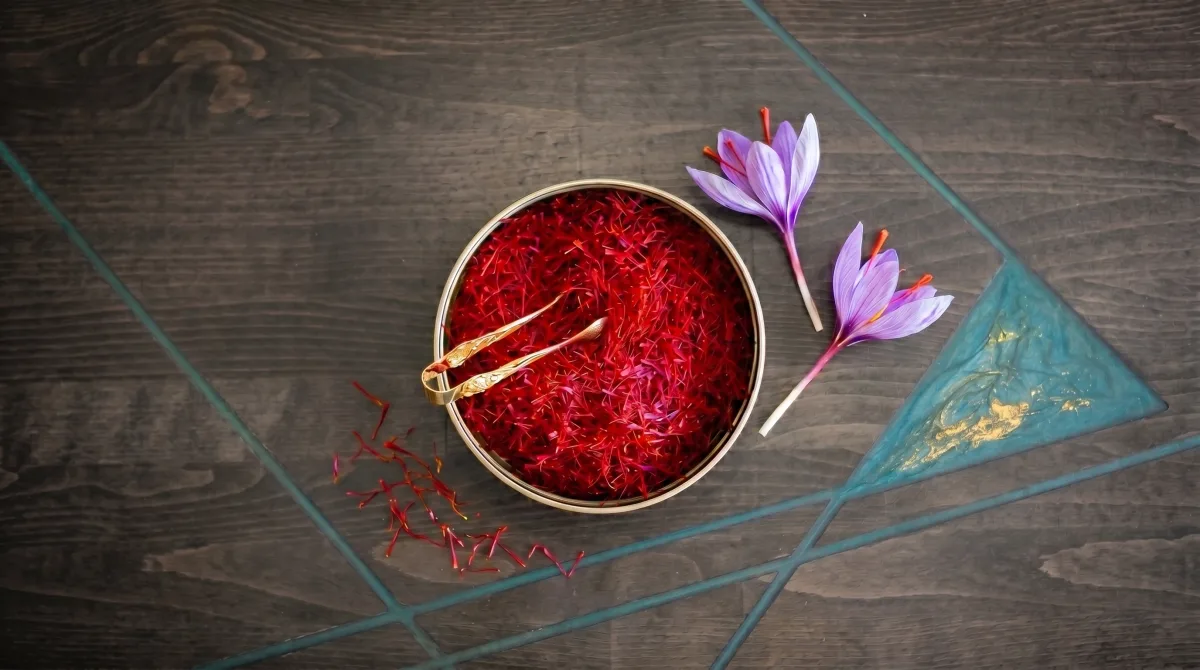
Saffron is considered the most expensive spice in the world and is often said to be worth its weight in gold. The reason lies not in its taste alone, but in how laboriously it is harvested. In this article we explain what saffron actually is, how it tastes and how to get the best out of the fine red threads.
Where saffron comes from
Saffron consists of the dried stigmas of the saffron crocus, Crocus sativus. Each flower carries just three of these wafer-thin threads, and they are picked exclusively by hand — on a few days in autumn, early in the morning, before the sun opens the blossoms.
A single kilogram of saffron takes well over 150,000 flowers. This pure handwork explains why saffron is so precious: it is not the spice itself that is rare, but the effort of harvesting it.
How saffron tastes
Real saffron tastes floral and slightly earthy, with notes of honey and fresh hay. Even a small amount unfolds a deep, warm aroma and colours dishes a glowing golden orange. Important: more is not better — too much saffron quickly turns bitter.
Using saffron properly
For saffron to release its full aroma, soak the threads briefly in a little warm water, milk or broth before cooking — this is called 'blooming'. This golden liquid then goes into the dish. Adding saffron directly to hot fat is not worth it: heat without liquid burns the delicate aroma.
A shopping tip: buy whole threads, not powder. Powder is often stretched or counterfeit; whole threads are easier to judge by colour and scent.
Storing saffron properly
Saffron is delicate: light, air and moisture make its aroma fade quickly. Store the threads airtight, dark and cool — for example in a small jar in a kitchen cupboard, not next to the stove. Stored like this, good saffron keeps for one to two years, but noticeably loses strength after that. Better to buy small amounts you will actually use than a large stock.
By the way: the intense colour doubles as a little quality test. If a thread releases its golden-yellow colour slowly in warm water, that speaks for real saffron — counterfeit product often colours immediately and glaring red.
Saffron in Persian cuisine
In Persian cuisine, saffron is everywhere — from golden rice to desserts. At Kaspio it is the heart of our signature dish Safran-Glück: tender chicken breast with saffron sauce, jasmine rice and barberries. If you want to taste what saffron can really do, that is a good place to start.