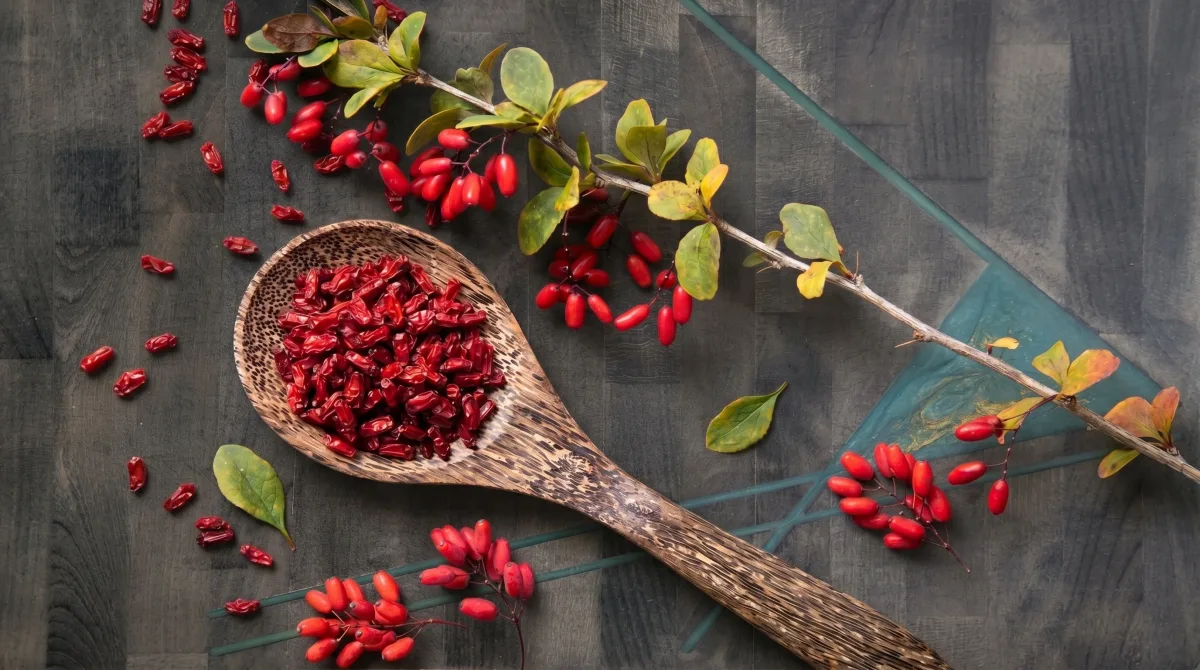
If you have ever eaten Persian saffron rice, you probably know them without knowing their name: small, bright red berries with a fresh, tart taste. These are barberries — 'zereshk' in Persian — and they are among the most characteristic ingredients of Persian cuisine.
What barberries are
Barberries are the fruits of the barberry shrub (Berberis). For cooking they are dried, and then look like tiny dark-red raisins — but taste the exact opposite of sweet: pleasantly sour, almost like a mild cranberry.
Taste and effect
Their acidity is what makes this small berry so valuable: it brings freshness and contrast to rich dishes with rice, saffron and meat. In Persian cuisine, barberries are traditionally also considered appetising.
Barberries in the kitchen
Classically, dried barberries are tossed briefly in a little butter — often with a pinch of sugar and a hint of saffron to balance the acidity. The key is to heat them only briefly, otherwise they turn bitter. Prepared like this, they crown the famous 'zereshk polo', Persian barberry rice.
A note on preparation: soak dried barberries briefly in water and rinse them thoroughly — this removes any sand, and the berries plump up nicely again.
By the way: in Iran, 'zereshk polo ba morgh' — barberry rice with chicken — is a classic festive dish that is rarely missing from weddings and family celebrations. The bright red berries on golden saffron rice are not just flavour but decoration too: a dish where the eye eats along.
Where barberries come from — and what they pair with
Most dried barberries sold today come from Iran, where the shrubs have been cultivated for centuries. They are harvested in autumn, once the berries have reached their deep red colour, and then gently dried to preserve colour and acidity. In Germany you will find them in Persian and Middle Eastern grocery stores — and increasingly in well-stocked supermarkets.
In the kitchen, barberries pair with anything that can balance their acidity: saffron rice and poultry are the classics, but they also add fresh accents to salads, couscous, muesli or pastries. If you can't get hold of barberries, unsweetened cranberries or currants will do in a pinch — the original, though, is finer and more tart.
At Kaspio
With us you will find barberries on the saffron rice of our Safran-Glück, among other dishes. Their tart bite is exactly the little counterpoint that makes a Persian rice dish complete.